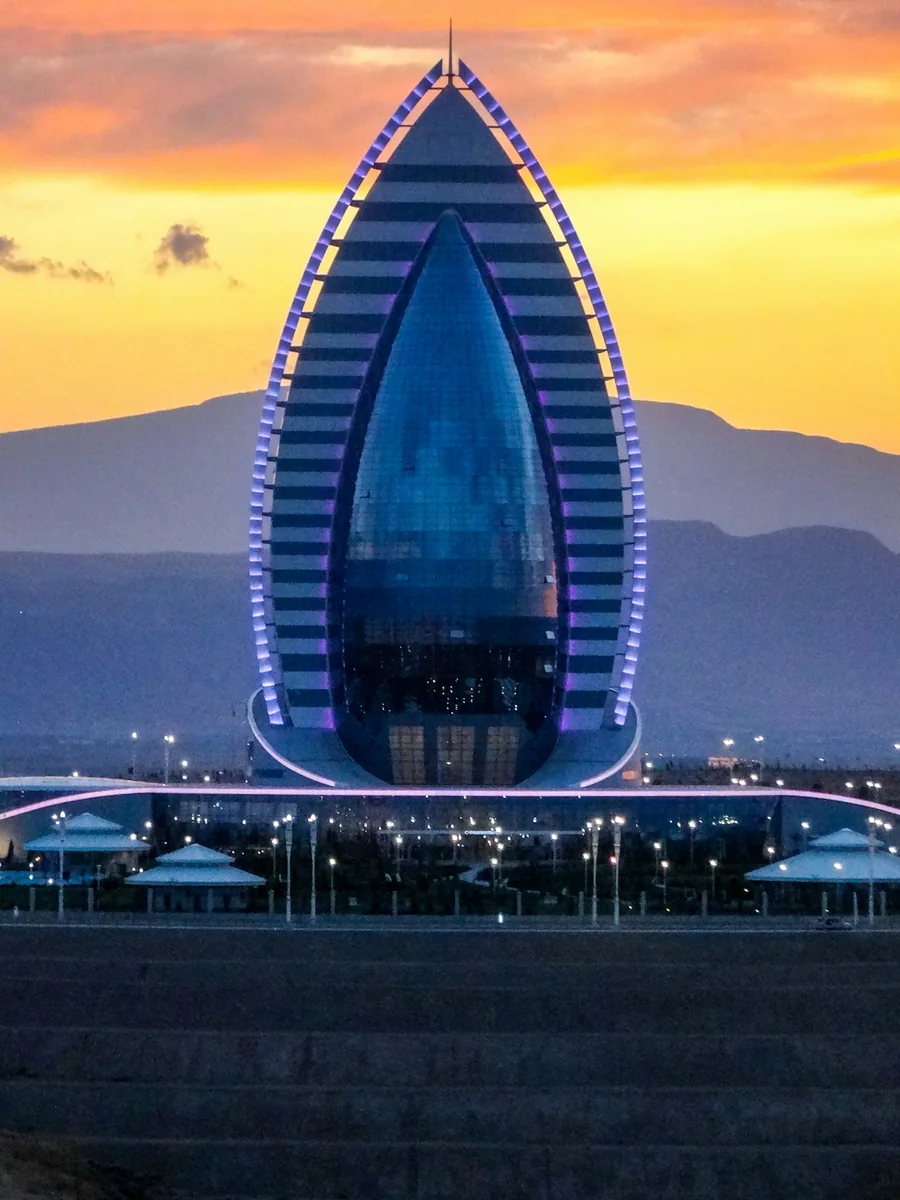
Lawyers near Ashgabat, Ashgabat Province, Turkmenistan (2026)
Find law firms near Ashgabat, Turkmenistan: offices, websites and direct contacts.
No individual lawyer profile is listed in Ashgabat, Ashgabat Province, Turkmenistan yet, but 4 law firms in Ashgabat are, including Altyn Kanun and Hukuk Dunyasy. 5 firms list a phone number (see contact numbers). Each firm profile gives the office address, website and practice areas.
No lawyers listed in Ashgabat yet
Is your practice here? Lawyers already in our records are listed at no cost. Claim your profile to manage it, or join the network to add your profile and get verified.
Lawyers near Ashgabat

Lawyer in Azerbaijan | Managing Partner at Acon Law & Consulting | Immigration, Corporate Law and Dispute Resolution
Capabilities/Areas:Practice: Immigration Law
Address: AZ1025, Azure Business Centre, Office 165B, Baku, Azerbaijan
Address: AZ1025, Azure Business Centre, Office 165B, Baku, Azerbaijan
State: Baku
Country: Azerbaijan
Sheheryar heads the firm’s dispute, advisory and transactions practice. He has experience in both domestic and transnational corporate matters
Capabilities/Areas:Practice: Life Sciences and Pharmaceutical Law
Address: Jami Commercial Street 11, Dha Phase 2, Karachi, Pakistan
Address: Jami Commercial Street 11, Dha Phase 2, Karachi, Pakistan
State: Sindh
Country: Pakistan
Which other law firms are near Ashgabat?
- Altyn KanunAshgabat, Turkmenistan< 1 km
- Hukuk DunyasyAshgabat, Turkmenistan< 1 km
- Cerberus LegalUzbekistan607 km
- BAS LawyerUzbekistan607 km
- Azizov & PartnersUzbekistan607 km
- Legalmax Law FirmUzbekistan607 km
- Elham Afrasiabi Law Office Elham Afrasiabi Attorney at Law (Tehran)Tehran, Iran663 km
- Ali Nikjou Legal GroupShahrestān-e Tehrān, Iran665 km
Contact numbers for lawyers near Ashgabat
- Malik GurbanovBaku, Azerbaijan+994 50 990 15 99
- Altyn KanunAshgabat, Turkmenistan+99312 478 719
- Hukuk DunyasyAshgabat, Turkmenistan+993 (12) 211628
- Elham Afrasiabi Law Office Elham Afrasiabi Attorney at Law (Tehran)Tehran, Iran+98 21 226 88280
- Ali Nikjou Legal GroupShahrestān-e Tehrān, Iran+982191098920
As listed on each profile. Profiles compiled from public sources are unverified until the firm claims them; call to confirm before you rely on a number.
How do I choose a lawyer for a matter in Ashgabat?
- Look for a firm that handles your kind of matter and works in the courts or offices that will deal with it, usually in Ashgabat.
- Ask whether the lawyer will travel to Ashgabat or work remotely, and how that changes the fee.
- Confirm the lawyer is admitted and in good standing with the bar or law society in Turkmenistan, and ask for a written fee estimate.
Questions about lawyers near Ashgabat
What are the contact numbers of lawyers near Ashgabat?
The firms nearest to Ashgabat that list a phone number on their profile: Malik Gurbanov (+994 50 990 15 99), Altyn Kanun (+99312 478 719), Hukuk Dunyasy (+993 (12) 211628) and Elham Afrasiabi Law Office Elham Afrasiabi Attorney at Law (Tehran) (+98 21 226 88280).
Can a lawyer outside Ashgabat take my matter?
Usually, yes. Many matters are handled by a firm in the nearest town or the regional capital. Ask whether the lawyer is licensed for the courts that will hear your case.
Hiring a lawyer in Ashgabat
Read the guide
Find a Lawyer in Ashgabat, Turkmenistan
Ashgabat, the capital of Turkmenistan, is the sole significant legal market in one of Central Asia's most resource-rich yet least accessible jurisdictions. The city hosts the country's licensed advokat (advocates) operating under the supervision of the Ministry of Adalat (Ministry of Justice) and the Collegium of Advocates of Turkmenistan. Ashgabat's legal market is relatively small by international standards, with a limited number of firms including Halkara Arbitraj (International Arbitration Center consultancy), ACM Consulting, and several domestic practices serving the state-dominated economy and the international energy companies operating under production sharing and service agreements.
Ashgabat is the seat of the Supreme Court of Turkmenistan, the Supreme Economic Court of Turkmenistan (which handles commercial disputes separately from the general court system), and Ashgabat City Courts. Turkmenistan's legal system is a civil law system with substantial Soviet-era foundations, operating under a presidential governance model. The Mejlis (Parliament) enacts legislation, while key commercial frameworks including the Law on Foreign Investment, Hydrocarbon Resources Law, and Law on Free Economic Zones govern the areas of greatest interest to international legal practitioners.
Frequently Asked Questions About Legal Services in Ashgabat
1. How much do lawyers charge in Ashgabat?
Attorney fees in Ashgabat reflect the unique market dynamics. International legal advisors working on energy sector projects charge between 200 to 600 USD per hour, often billing from offices in Istanbul, Dubai, or London while providing Turkmenistan-focused advisory. Domestic practitioners charge significantly less, typically 100 to 500 TMT per hour (approximately $28–$143 USD at official rates). Fee structures for energy sector work are frequently project-based or retainer arrangements rather than hourly billing.
2. What are the main practice areas in Ashgabat?
Ashgabat lawyers focus on oil and gas law (upstream development, production sharing agreements, pipeline projects), construction and infrastructure (major state-funded urban development), foreign investment structuring, government contracts and procurement, labor and immigration law for expatriate workers, and trade compliance. The dominance of the hydrocarbon sector and state-led construction programs means that energy law and government procurement constitute the majority of high-value legal work.
3. How does the Turkmen court system work?
Turkmenistan's judiciary comprises District and City Courts for civil and criminal matters, Provincial Courts (Welayat Courts) and Ashgabat City Court as appellate bodies, the Supreme Court as the highest judicial authority for civil and criminal matters, and the Supreme Economic Court for commercial and economic disputes. The judicial system operates under the oversight of the President, who appoints judges.
4. What industries drive legal demand in Ashgabat?
The economy is dominated by natural gas (Turkmenistan has the world's fourth-largest gas reserves; Galkynysh is among the largest gas fields globally), oil production and refining, petrochemicals (Kiyanly and Garabogaz complexes), construction and urban development (Ashgabat's extensive marble-clad city center), textiles and cotton processing, and transport infrastructure (TAPI pipeline, Turkmenbashi International Seaport). State enterprise Turkmengas and Turkmenneft are central to the legal market.
5. Can foreign lawyers practice in Ashgabat?
Foreign lawyers cannot practice Turkmen law or appear before Turkmen courts. Legal advisory for international clients is typically provided from offshore locations (Istanbul, Dubai, London) by firms with Turkmenistan expertise. On-the-ground representation requires engaging locally licensed advocates through the Collegium of Advocates. International energy companies typically maintain in-house legal teams supplemented by international counsel for arbitration and cross-border matters.
6. What dispute resolution options exist for businesses in Turkmenistan?
The Arbitration Commission at the Chamber of Commerce and Industry of Turkmenistan handles domestic commercial disputes. International energy contracts typically provide for arbitration under ICC or UNCITRAL rules in neutral venues such as Stockholm, London, or Geneva. Turkmenistan is a signatory to the New York Convention, though enforcement of foreign arbitral awards in practice requires careful legal navigation.
7. What should foreign businesses know about operating in Turkmenistan?
Key considerations include state control of the hydrocarbon sector through Turkmengas and Turkmenneft, currency exchange restrictions (official vs. market rates), mandatory state registration of all contracts, import/export licensing requirements, visa and work permit complexities, and limited availability of independent legal information. Legal counsel with direct experience in Turkmen energy law, state enterprise negotiations, and Central Asian regulatory environments is critical. The TAPI (Turkmenistan-Afghanistan-Pakistan-India) gas pipeline project and other transnational initiatives continue to attract international legal expertise to the jurisdiction.
For law firms and lawyers
Is your practice listed in Ashgabat?
Lawyers already in our records are listed at no cost. Claim your profile to manage it, or join the network to add your profile and get verified.