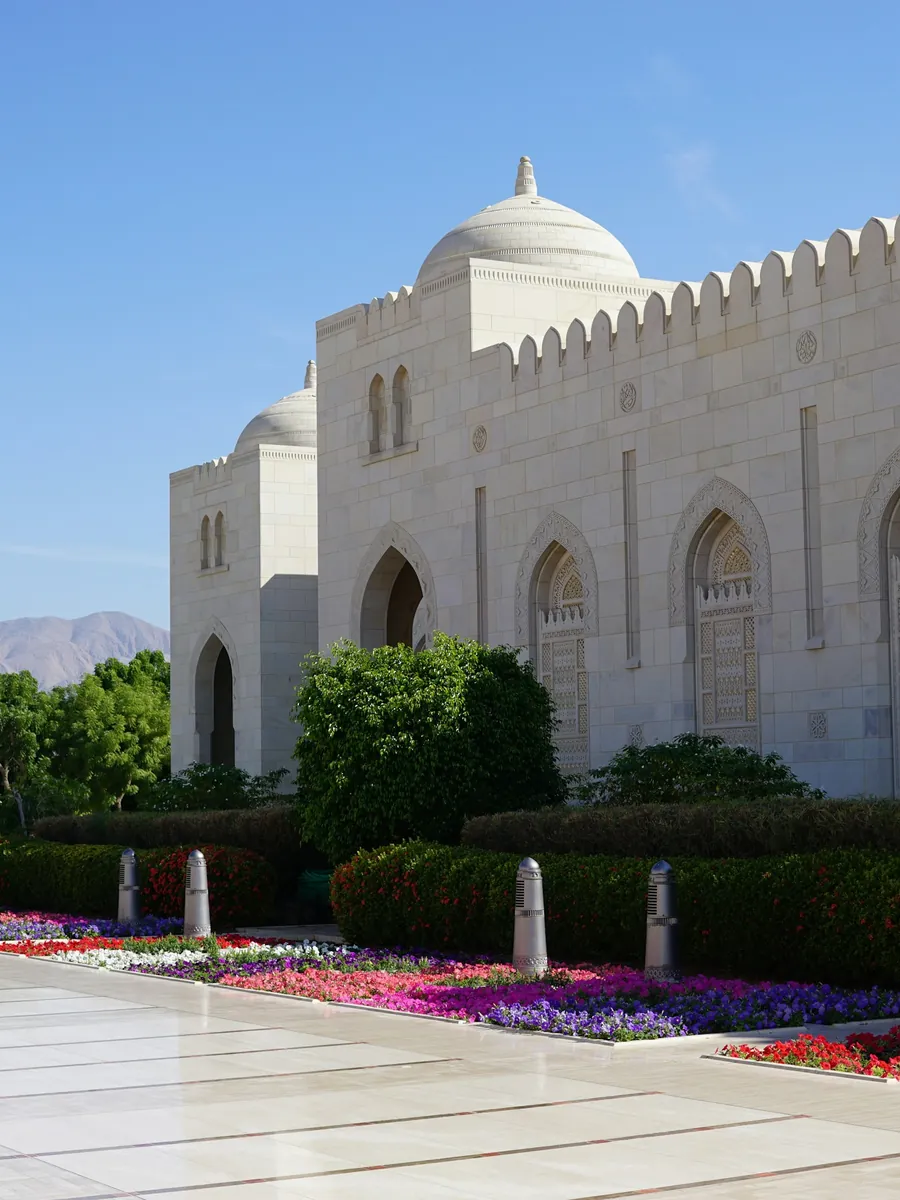
Lawyers near Muscat, Muscat Governorate, Oman (2026)
Find law firms near Muscat, Oman: offices, websites and direct contacts.
No individual lawyer profile is listed in Muscat, Muscat Governorate, Oman yet, but 26 law firms in Muscat are, including Al Busaidy, Mansoor Jamal & Co. (AMJ) and Said Al Shahry & Partners (SASLO). 3 firms list a phone number (see contact numbers). Each firm profile gives the office address, website and practice areas.
No lawyers listed in Muscat yet
Is your practice here? Lawyers already in our records are listed at no cost. Claim your profile to manage it, or join the network to add your profile and get verified.
Lawyers near Muscat

Sheheryar heads the firm’s dispute, advisory and transactions practice. He has experience in both domestic and transnational corporate matters
Capabilities/Areas:Practice: Life Sciences and Pharmaceutical Law
Address: Jami Commercial Street 11, Dha Phase 2, Karachi, Pakistan
Address: Jami Commercial Street 11, Dha Phase 2, Karachi, Pakistan
State: Sindh
Country: Pakistan


Saudi Corporate Lawyer
Capabilities/Areas:Practice: Business and Corporate Law
Address: Kingdom Tower, Al Olaya, Riyadh, Saudi Arabia | Zahran Business Center, Prince Sultan Street
Address: Kingdom Tower, Al Olaya, Riyadh, Saudi Arabia | Zahran Business Center, Prince Sultan Street,
State: Makkah Region
Country: Saudi Arabia
Which other law firms are near Muscat?
- Al Busaidy, Mansoor Jamal & Co. (AMJ)Muscat, Oman< 1 km
- Said Al Shahry & Partners (SASLO)Muscat, Oman< 1 km
- Al Alawi & Co Advocates & Legal ConsultantsMuscat, Oman< 1 km
- Hilal al Sabqi Advocates and Legal ConsultantsMuscat, Oman< 1 km
- Fb Magnesia LawMuscat, Oman< 1 km
- Prof. Rashid, Mohamed el Murtada & Co. Barristers and Legal ConsultantsMuscat, Oman< 1 km
- Dr. Talib Al-Hosni Office Advocates & Legal ConsultantsMuscat, Oman< 1 km
- Khalid al Wahaibi Advocates and Legal ConsultantsMuscat, Oman< 1 km
Contact numbers for lawyers near Muscat
- Taha DahlanJeddah, Saudi Arabia+966550480008
- Al Busaidy, Mansoor Jamal & Co. (AMJ)Muscat, Oman00968 2482 9200
- Al Alawi & Co Advocates & Legal ConsultantsMuscat, Oman+968 24699761-2
As listed on each profile. Profiles compiled from public sources are unverified until the firm claims them; call to confirm before you rely on a number.
How do I choose a lawyer for a matter in Muscat?
- Look for a firm that handles your kind of matter and works in the courts or offices that will deal with it, usually in Muscat Governorate.
- Ask whether the lawyer will travel to Muscat or work remotely, and how that changes the fee.
- Confirm the lawyer is admitted and in good standing with the bar or law society in Oman, and ask for a written fee estimate.
Questions about lawyers near Muscat
What are the contact numbers of lawyers near Muscat?
The firms nearest to Muscat that list a phone number on their profile: Taha Dahlan (+966550480008), Al Busaidy, Mansoor Jamal & Co. (AMJ) (00968 2482 9200) and Al Alawi & Co Advocates & Legal Consultants (+968 24699761-2).
Can a lawyer outside Muscat take my matter?
Usually, yes. Many matters are handled by a firm in the nearest town or the regional capital. Ask whether the lawyer is licensed for the courts that will hear your case.
Hiring a lawyer in Muscat
Read the guide
Securing experienced lawyers in Muscat, the capital and commercial centre of the Sultanate of Oman, is essential for navigating the country's evolving legal and business environment. Muscat serves as the seat of all major governmental institutions, including the Royal Court, Supreme Court, Ministry of Justice and Legal Affairs, and Capital Market Authority, making it the undisputed hub of Omani legal practice. The city's legal community includes established Omani firms such as Al Busaidy, Mansoor Jamal & Co (AMJ), Said Al Shahry & Partners (SASLO), and Al Alawi & Co, alongside international firms including Dentons, Clyde & Co, Trowers & Hamlins, and Al Tamimi & Company, all maintaining significant Muscat offices. Whether you require corporate advisory services for Oman Vision 2040 investment projects, dispute resolution before the Muscat Primary Court or Commercial Court, or guidance on the Sultanate's rapidly modernising regulatory framework, Global Law Lists connects you with trusted legal professionals in Muscat.
What Types of Legal Services Are Available in Muscat?
Lawyers in Muscat cover the full spectrum of legal practice areas required by Oman's diversifying economy. Corporate and commercial law dominates, driven by major infrastructure projects, foreign investment under Oman Vision 2040, and the expansion of free zones including the Duqm Special Economic Zone (SEZAD) and Sohar Free Zone. Key practice areas include company formation and restructuring, mergers and acquisitions, banking and Islamic finance (Oman has a growing Islamic banking sector regulated by the Central Bank of Oman), oil and gas law, construction and engineering disputes, employment and Omanisation compliance, real estate and property development, intellectual property registration, maritime and shipping law, tax advisory (including Oman's value-added tax introduced in April 2021), and international arbitration through the Oman Commercial Arbitration Centre. Family law matters, including marriage, divorce, custody, and inheritance, are governed by Omani Personal Status Law based on Islamic Sharia principles. Criminal defence representation before the Primary Courts and Appeal Courts is also widely available.
How Is the Court System Structured in Muscat?
Muscat hosts all levels of Oman's judicial hierarchy. The court system operates under the Judicial Authority Law (Royal Decree 90/99) and is organised into three tiers. Primary Courts (also called Courts of First Instance) hear civil, commercial, criminal, family, and labour disputes at first instance. The Muscat Primary Court is the largest in the country and includes specialised divisions for commercial, labour, and personal status cases. Above this sits the Court of Appeal, hearing appeals from Primary Court judgments across civil, commercial, criminal, and personal status matters. The Supreme Court in Muscat is Oman's highest judicial authority, functioning primarily as a court of cassation reviewing questions of law rather than re-examining facts. Specialised judicial bodies include the Tax Committee for tax disputes, the Tender Board for government procurement challenges, and the Capital Market Authority for securities-related enforcement. The Oman Commercial Arbitration Centre (OCAC), established under Royal Decree 26/2018 and headquartered in Muscat, provides institutional arbitration services applying rules aligned with international best practices.
How Much Do Lawyers Charge in Muscat?
Legal fees in Muscat vary based on the firm's profile, the lawyer's experience, and the complexity of the matter. Hourly rates at international law firms operating in Muscat typically range from OMR 60 to OMR 200 (approximately USD 156 to USD 520), with senior partners commanding the higher end. Established Omani firms generally charge OMR 30 to OMR 100 per hour for experienced practitioners. Fixed fees are common for routine services such as company registration (OMR 500 to OMR 2,000), contract drafting (OMR 200 to OMR 1,500), and standard employment agreements. Litigation retainers for commercial disputes typically start at OMR 2,000 to OMR 10,000 depending on case value and complexity. Monthly retainer arrangements for ongoing corporate advisory range from OMR 500 to OMR 5,000. Contingency fee arrangements are not widely practised in Oman. All fee agreements should be documented in writing, and clients should confirm whether the quoted fees include court fees, translation costs, and other disbursements. Legal services in Oman are currently exempt from VAT, though the regulatory framework continues to evolve.
Who Regulates Lawyers in Muscat?
The legal profession in Oman is regulated by the Ministry of Justice and Legal Affairs and the Oman Bar Association (Oman Lawyers Association). All Omani lawyers must be registered with the Ministry and hold a valid practising licence. The Advocacy Law (Royal Decree 108/96) governs the admission, conduct, and discipline of lawyers. To practise as an advocate before Omani courts, an individual must be an Omani national, hold a law degree from a recognised university, and have completed a minimum period of legal training. Foreign lawyers are prohibited from appearing before Omani courts and may only work in advisory capacities within law firms, typically as legal consultants on international, cross-border, or foreign law matters. The Omanisation requirement mandates that law firms employ a minimum percentage of Omani nationals, reflecting the Sultanate's broader workforce nationalisation policies. Clients can verify a lawyer's registration status through the Ministry of Justice and Legal Affairs.
What Industries Drive Legal Demand in Muscat?
Muscat's legal market is shaped by Oman's economic diversification programme under Oman Vision 2040. The oil and gas sector remains significant, with legal work arising from production-sharing agreements, petroleum concessions, LNG projects, and downstream petrochemical developments operated by entities including Petroleum Development Oman (PDO), OQ Group, and Oman LNG. However, diversification is driving rapid growth in legal demand across tourism and hospitality (mega-projects such as the Yiti tourism development), logistics and port operations (Sohar Port, Duqm Port, and Salalah Port), manufacturing and industrial zones, renewable energy (particularly the green hydrogen initiative and Oman's solar and wind projects), mining (Oman is a significant producer of chromite, gypsum, and limestone), and financial services (banking, insurance, and the growing Islamic finance sector). The Duqm Special Economic Zone, spanning 2,000 square kilometres, has generated substantial legal work in project finance, construction, employment, and regulatory compliance. Technology, telecommunications, and healthcare are emerging sectors creating new advisory needs.
What Should I Know About Doing Business Legally in Muscat?
Oman has implemented significant reforms to attract foreign investment under Vision 2040. The Foreign Capital Investment Law (Royal Decree 50/2019) liberalised foreign ownership rules, allowing 100% foreign ownership in most sectors without requiring an Omani partner, subject to certain exclusions and approvals. Company formation is governed by the Commercial Companies Law (Royal Decree 18/2019), with registration through the Ministry of Commerce, Industry, and Investment Promotion. The Public Private Partnership (PPP) Law (Royal Decree 52/2019) provides a framework for infrastructure projects. Employment relationships are governed by the Labour Law (Royal Decree 35/2003, as amended), with strict Omanisation quotas varying by sector — non-compliance carries penalties including work permit restrictions. Oman introduced VAT at 5% in April 2021, and businesses must comply with registration and filing requirements. Intellectual property protection is available through trademark, patent, and copyright registration with the relevant government authorities. Dispute resolution clauses in commercial contracts should specify whether disputes will be resolved through Omani courts or the Oman Commercial Arbitration Centre, which offers a modern alternative for commercial matters.
Why Use Global Law Lists to Find a Lawyer in Muscat?
Global Law Lists provides an authoritative directory of qualified lawyers and law firms in Muscat, covering the full range of legal services required in Oman's dynamic commercial environment. Whether you need a corporate lawyer for foreign investment structuring, an oil and gas specialist for concession agreements, employment counsel for Omanisation compliance, a construction lawyer for project disputes, or a family law practitioner for personal status matters, our platform connects you with experienced Muscat legal professionals. With Oman's legal and commercial landscape undergoing rapid modernisation under Vision 2040, securing the right legal counsel in Muscat is more important than ever. Search Global Law Lists today to find trusted legal representation in Muscat, Oman.
For law firms and lawyers
Is your practice listed in Muscat?
Lawyers already in our records are listed at no cost. Claim your profile to manage it, or join the network to add your profile and get verified.