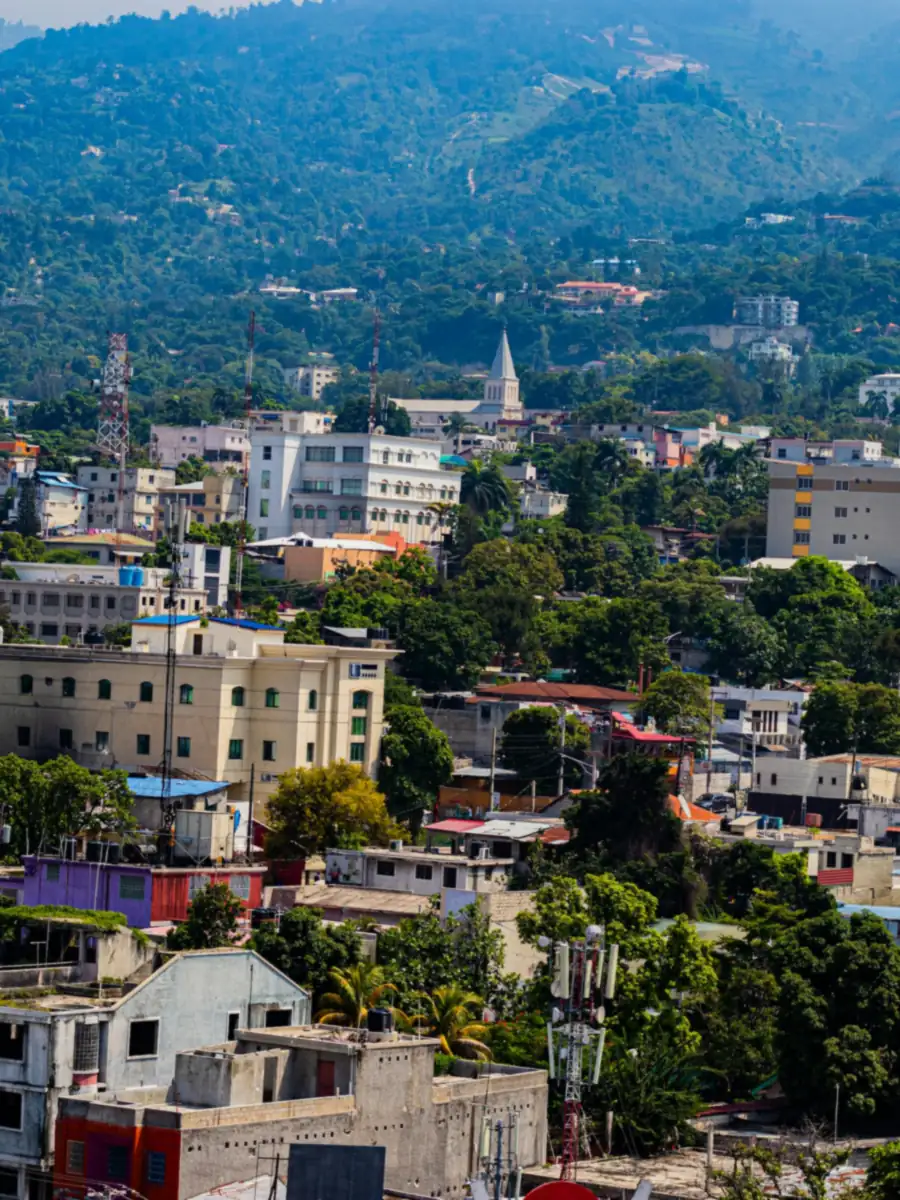
Lawyers near Port-au-Prince, Ouest, Haiti (2026)
Find law firms near Port-au-Prince, Haiti: offices, websites and direct contacts.
No individual lawyer profile is listed in Port-au-Prince, Ouest, Haiti yet, but 10 law firms in Port-au-Prince are, including Cabinet Patrick LAURENT and Cabinet de Lespinasse. One firm lists a phone number (see contact numbers). Each firm profile gives the office address, website and practice areas.
No lawyers listed in Port-au-Prince yet
Is your practice here? Lawyers already in our records are listed at no cost. Claim your profile to manage it, or join the network to add your profile and get verified.
Law firms near Port-au-Prince

Juristech Legal & Associated is a law firm in Port-au-Prince, Ouest, Haiti.
Capabilities/Areas:Practice: General Practice
Address: Port-au-Prince, Haiti
State: Ouest
Country: Haiti
Cabinet de Lespinasse is a law firm in Port-au-Prince, Ouest, Haiti.
Capabilities/Areas:Practice: Trademark Law
Address: Port-au-Prince, Haiti
State: Ouest
Country: Haiti
Patrick Laurent et Associés: Haiti's premier law firm. Experienced team, client-focused, reputation for integrity and expertise.
Capabilities/Areas:Practice: Full Services Law Firm
Address: 24 Rue Pacot, Port-au-Prince, Haiti
Address: 24 Rue Pacot, Port-au-Prince,
State: Ouest
Country: Haiti
Haitian law firm founded in 1907, practising intellectual property, business and labor law from Pétion-Ville with a second office in Cap-Haïtien.
Capabilities/Areas:Practice: Intellectual Property Law
Address: 62, rue Geffrard (angle rue Chavannes), Pétion-Ville, Haïti, HT 6140, Arrondissement de Port-au-Prince, Haiti
Address: 62, rue Geffrard (angle rue Chavannes), Pétion-Ville, Haïti, HT 6140
State: Ouest
Country: Haiti
Dutour Avocats is a law firm in Pétionville, Ouest, Haiti.
Capabilities/Areas:Practice: General Practice
Address: Pétionville, Haiti
State: Ouest
Country: Haiti
Cabinet Saintermé is a law firm in Ouest, Haiti.
Capabilities/Areas:Practice: General Practice
Address: Ouest, Haiti
State: Ouest
Country: Haiti
Which other law firms are near Port-au-Prince?
- Eddy LaguerreHaiti66 km
- Cabinet LissadeHaiti66 km
Contact numbers for lawyers near Port-au-Prince
- Cabinet Patrick LAURENTPort-au-Prince, Haiti+50937027137
As listed on each profile. Profiles compiled from public sources are unverified until the firm claims them; call to confirm before you rely on a number.
How do I choose a lawyer for a matter in Port-au-Prince?
- Look for a firm that handles your kind of matter and works in the courts or offices that will deal with it, usually in Ouest.
- Ask whether the lawyer will travel to Port-au-Prince or work remotely, and how that changes the fee.
- Confirm the lawyer is admitted and in good standing with the bar or law society in Haiti, and ask for a written fee estimate.
Questions about lawyers near Port-au-Prince
What are the contact numbers of lawyers near Port-au-Prince?
The firms nearest to Port-au-Prince that list a phone number on their profile: Cabinet Patrick LAURENT (+50937027137).
Can a lawyer outside Port-au-Prince take my matter?
Usually, yes. Many matters are handled by a firm in the nearest town or the regional capital. Ask whether the lawyer is licensed for the courts that will hear your case.
Hiring a lawyer in Port-au-Prince
Read the guide
Engaging qualified lawyers in Port-au-Prince, the capital of the Republic of Haiti, is essential for navigating the country's civil law legal system, which is rooted in the Napoleonic Code and influenced by French legal traditions. Port-au-Prince serves as the seat of the Cour de Cassation (Supreme Court), the National Palace, the Ministry of Justice, and all principal government institutions. The city's legal community includes established law firms and solo practitioners offering services in civil, commercial, criminal, family, and property law. Prominent firms and practitioners operate from offices in Petion-Ville, Delmas, and the central business district. Whether you require representation before the Tribunal de Premiere Instance de Port-au-Prince, assistance with real estate title verification, corporate formation, or guidance on Haiti's foreign investment framework, Global Law Lists connects you with experienced legal professionals in Port-au-Prince.
What Types of Legal Services Are Available in Port-au-Prince?
Lawyers in Port-au-Prince (known as avocats) provide legal services across Haiti's civil law system. Real estate and property law is among the most critical practice areas, given the complexities of land tenure in Haiti — many properties lack formal title documentation, requiring lawyers to conduct thorough title searches and boundary verifications through the Direction Generale des Impots (DGI) and local land registries. Commercial law covers company formation, contract drafting, and regulatory compliance under the Haitian Commercial Code. Family law handles marriage, divorce, paternity, custody, and succession matters under the Civil Code. Criminal defence representation before the Tribunal Correctionnel and Cour d'Assises is widely available. Other practice areas include labour and employment law under the Code du Travail, immigration and nationality, intellectual property registration, banking and finance, tax advisory, NGO registration and compliance (Haiti hosts numerous international NGOs), and international humanitarian law. Legal services related to customs and trade law and construction and reconstruction projects remain in high demand.
How Is the Court System Structured in Port-au-Prince?
Port-au-Prince houses Haiti's judicial hierarchy, structured under the Constitution of 1987 and modelled on the French system. The Cour de Cassation (Court of Cassation) is Haiti's supreme judicial authority, reviewing questions of law and procedural compliance from lower court decisions — it does not re-examine facts but ensures uniform application of the law. The Cour d'Appel de Port-au-Prince (Court of Appeal) hears appeals from the courts of first instance across civil, commercial, and criminal matters. The Tribunal de Premiere Instance de Port-au-Prince (Court of First Instance) exercises general jurisdiction over civil, commercial, and serious criminal cases. The Tribunal de Paix (Justice of the Peace courts) in each commune handle minor civil disputes, small claims, petty offences, and conciliation proceedings. The Cour d'Assises convenes for serious criminal trials including murder and other major felonies. Specialized jurisdictions include the Tribunal du Travail (Labour Court) for employment disputes and the Tribunal pour Enfants (Juvenile Court). Haiti's judiciary has undergone reform efforts supported by the Conseil Superieur du Pouvoir Judiciaire (CSPJ), established to strengthen judicial independence and administration.
How Much Do Lawyers Charge in Port-au-Prince?
Legal fees in Port-au-Prince vary depending on the lawyer's experience, the nature of the matter, and whether the client is a domestic individual, business, or international entity. For domestic clients, consultation fees typically range from HTG 2,500 to HTG 10,000 (approximately USD 18 to USD 75) for initial appointments. Litigation representation before the Tribunal de Premiere Instance may involve retainers of HTG 25,000 to HTG 150,000 (USD 185 to USD 1,100) depending on case complexity. For international clients and foreign investment matters, fees are often quoted in US dollars, with hourly rates ranging from USD 75 to USD 200 for experienced practitioners, and USD 150 to USD 350 for senior partners at established firms handling complex commercial matters. Real estate transactions typically involve legal fees of 1% to 3% of the property value, plus notarial fees, registration taxes, and government charges. Corporate formation and registration services range from USD 1,000 to USD 5,000. Written fee agreements specifying scope, currency, and payment terms are strongly recommended given the dual-currency economy.
Who Regulates Lawyers in Port-au-Prince?
The legal profession in Haiti is regulated by the Ordre des Avocats (Bar Association), with the Barreau de Port-au-Prince being the largest and most prominent bar in the country. All practising lawyers must be admitted to a local bar association after completing a law degree (Licence en Droit) from a recognized Haitian university — such as the Faculte de Droit et des Sciences Economiques of the Universite d'Etat d'Haiti or accredited private institutions — and satisfying the requirements for admission including a supervised training period (stage). The Batonnier (President of the Bar) oversees professional conduct and disciplinary matters within the bar. Lawyers in Haiti hold the title of Avocat and must maintain membership in good standing with their respective bar association. Notaires (notaries) play a distinct and essential role in Haitian law, required for the authentication of real estate transactions, corporate formations, and various civil acts. Foreign lawyers are not permitted to practise Haitian law without local bar admission but may provide advisory services on foreign law matters through local firm affiliations.
What Industries Drive Legal Demand in Port-au-Prince?
Port-au-Prince's legal market reflects Haiti's economic structure and the significant presence of international development organizations. The international development and NGO sector is a substantial driver of legal work, with organizations such as the United Nations (MINUJUSTH successor operations), USAID, World Bank, Inter-American Development Bank, and numerous international NGOs requiring legal advisory on organizational registration, employment contracts, procurement, tax exemptions, and compliance. Telecommunications (Digicel Haiti, Natcom) generates corporate and regulatory legal demand. Banking and financial services — through institutions including BNC, Sogebank, Unibank, and Capital Bank — require advisory on lending, compliance, and the regulatory framework of the Banque de la Republique d'Haiti (BRH). Real estate and construction remain active sectors, driven by reconstruction and development projects. Textile and garment manufacturing in the SONAPI Industrial Park and Caracol Industrial Park generates employment law and trade compliance work, particularly under the HOPE/HELP preferential trade legislation. Agriculture, import-export trade, mining exploration, and energy (including electricity generation and distribution) contribute additional legal demand.
Why Use Global Law Lists to Find a Lawyer in Port-au-Prince?
Global Law Lists provides a directory of qualified lawyers and law firms in Port-au-Prince, Haiti's capital and legal centre. Whether you need a commercial lawyer for business formation, a property specialist for real estate title verification, a litigator for proceedings before the Tribunal de Premiere Instance, employment counsel, a criminal defence advocate, or advisory services for international development and NGO compliance, our platform connects you with experienced Port-au-Prince legal professionals. Navigating Haiti's civil law system requires knowledgeable local counsel, and Global Law Lists serves as your reliable starting point. Search Global Law Lists today to find trusted legal representation in Port-au-Prince, Haiti.
For law firms and lawyers
Is your practice listed in Port-au-Prince?
Lawyers already in our records are listed at no cost. Claim your profile to manage it, or join the network to add your profile and get verified.