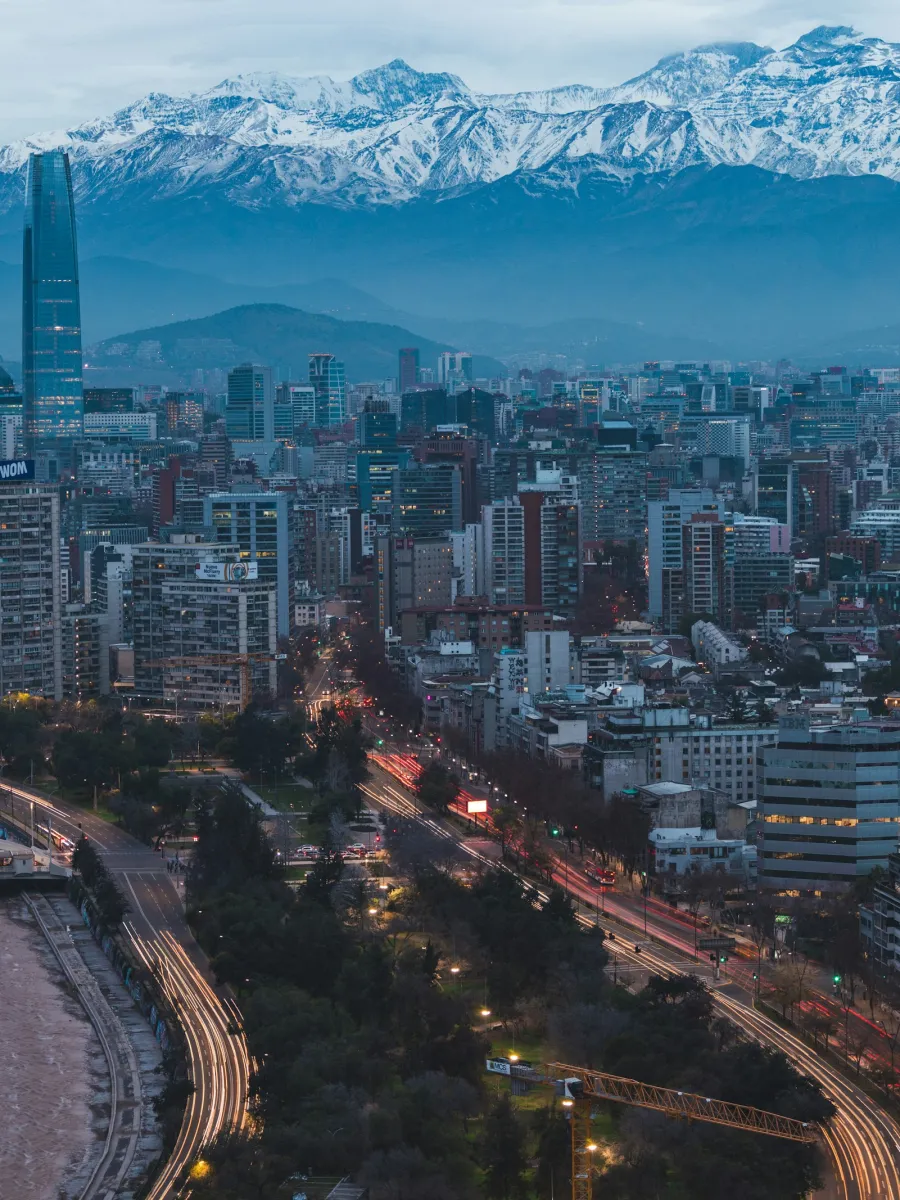
Lawyers near Santiago, Santiago Metropolitan Region, Chile (2026)
Find law firms near Santiago, Chile: offices, websites and direct contacts.
No individual lawyer profile is listed in Santiago, Santiago Metropolitan Region, Chile yet, but 443 law firms in Santiago are, including Serrano & Foix Abogados and Smartlex. Each firm profile gives the office address, website and practice areas.
No lawyers listed in Santiago yet
Is your practice here? Lawyers already in our records are listed at no cost. Claim your profile to manage it, or join the network to add your profile and get verified.
Law firms near Santiago

Canales Molina Abogados y Cía. Ltda. is a law firm in Santiago, Santiago Metropolitan, Chile.
Capabilities/Areas:Practice: General Practice
Address: Santiago, Chile
State: Santiago Metropolitan Region
Country: Chile
Resuelve Tus Deudas.Cl is a law firm in Santiago, Santiago Metropolitan, Chile.
Capabilities/Areas:Practice: General Practice
Address: Santiago, Chile
State: Santiago Metropolitan Region
Country: Chile
Madariaga & Compañía Abogados is a law firm in Santiago, Santiago Metropolitan, Chile.
Capabilities/Areas:Practice: General Practice
Address: Santiago, Chile
State: Santiago Metropolitan Region
Country: Chile
Koch y Compañia Limitada is a law firm in Santiago, Santiago Metropolitan, Chile.
Capabilities/Areas:Practice: Litigation
Address: Santiago, Chile
State: Santiago Metropolitan Region
Country: Chile
Picand & Ríos is a law firm in Santiago, Santiago Metropolitan, Chile.
Capabilities/Areas:Practice: Litigation
Address: Santiago, Chile
State: Santiago Metropolitan Region
Country: Chile
Ovalle / Consejeros Legales is a law firm in Santiago, Santiago Metropolitan, Chile.
Capabilities/Areas:Practice: Contract Law
Address: Santiago, Chile
State: Santiago Metropolitan Region
Country: Chile
Which other law firms are near Santiago?
- Serrano & Foix AbogadosSantiago, Chile< 1 km
- SmartlexSantiago, Chile< 1 km
- MiasesorlegalSantiago, Chile< 1 km
- Aguirre y Greene Estudio JurídicoSantiago, Chile< 1 km
- Data Legal ConsultingSantiago, Chile< 1 km
- Asesoria Compras Publicas AgrSantiago, Chile< 1 km
- Equitat Labour & Employment LawSantiago, Chile< 1 km
- Lex PlaySantiago, Chile< 1 km
How do I choose a lawyer for a matter in Santiago?
- Look for a firm that handles your kind of matter and works in the courts or offices that will deal with it, usually in Santiago Metropolitan Region.
- Ask whether the lawyer will travel to Santiago or work remotely, and how that changes the fee.
- Confirm the lawyer is admitted and in good standing with the bar or law society in Chile, and ask for a written fee estimate.
Questions about lawyers near Santiago
Can a lawyer outside Santiago take my matter?
Usually, yes. Many matters are handled by a firm in the nearest town or the regional capital. Ask whether the lawyer is licensed for the courts that will hear your case.
Hiring a lawyer in Santiago
Read the guide
Engaging qualified lawyers in Santiago is essential for navigating the legal landscape of Chile's capital, the commercial centre of one of Latin America's most stable and business-friendly economies. Whether you need established law firms in Santiago for mining transactions, corporate advisory, or international trade, or require specialized legal services in Santiago for employment law, intellectual property, real estate, or tax planning, Global Law Lists connects you with experienced Santiago-based legal professionals. Santiago concentrates the vast majority of Chile's legal activity, home to the Supreme Court, leading law firms, and the regulatory bodies that govern Latin America's most open economy.
What Is the Legal System in Santiago?
Santiago operates under Chile's civil law system based on the Napoleonic/Continental European tradition. The Constitution of the Republic of Chile is the supreme law, having undergone significant debate and reform processes in recent years. Chile's foundational legislation includes the Civil Code (1855), modeled on the Napoleonic Code and the work of Andres Bello, the Commercial Code (1865), the Labour Code, the Tax Code, and the Mining Code. Key regulatory legislation includes the Corporations Law (Law No. 18,046), the Securities Market Law (Law No. 18,045), and the Foreign Investment Framework (Law No. 20,848). Chile is notable for its extensive network of free trade agreements (over 30 FTAs with 65 countries), making international trade law a core practice area. The Personal Data Protection Law was substantially updated, and Chile has comprehensive consumer protection legislation (Law No. 19,496).
What Is the Court System in Santiago?
Santiago hosts Chile's principal judicial institutions. The Supreme Court (Corte Suprema), composed of 21 justices, is the highest court of appeal and exercises constitutional review through the recurso de proteccion (protection appeal). The Santiago Court of Appeal (Corte de Apelaciones de Santiago) is the largest appellate court in Chile, with multiple chambers handling civil, criminal, labour, and family appeals. The Civil Courts of Santiago handle general civil matters. The Labour Courts, reformed under the labour justice reform of 2008, handle employment disputes through oral proceedings. Criminal Courts operate under the accusatorial system introduced by the Criminal Procedure Reform (2000-2005). The Tax and Customs Courts (TTA) handle revenue disputes. The Free Competition Court (TDLC) adjudicates antitrust matters. The Environmental Courts (three nationwide, including one in Santiago) handle environmental disputes. The Santiago Arbitration and Mediation Centre (CAM Santiago), operated by the Santiago Chamber of Commerce, is the leading arbitration institution in Chile and one of the most respected in Latin America.
How Much Do Lawyers Charge in Santiago?
Legal fees in Santiago reflect Chile's status as a high-income Latin American market. Hourly rates for partners at top-tier Santiago firms range from UF 8 to UF 15+ per hour (approximately USD 300 to USD 560+), as many Chilean firms denominate fees in Unidades de Fomento (UF), an inflation-adjusted currency unit. Senior associates charge UF 4 to UF 8 (USD 150 to USD 300). For major M&A transactions, legal advisory fees typically range from USD 50,000 to USD 400,000+. Mining law advisory commands premium rates given Chile's position as the world's largest copper producer. Real estate conveyancing fees generally range from 0.5% to 1.5% of property value. Employment dispute representation costs CLP 1,000,000 to CLP 5,000,000 (USD 1,050 to USD 5,250). Court filing fees are modest. Legal fees are subject to 19% IVA (VAT). Contingency fee arrangements (pacto de cuota litis) are permitted.
What Industries Drive Legal Demand in Santiago?
Santiago's legal market is driven by Chile's diversified and internationally integrated economy. Mining and natural resources are paramount -- Chile is the world's largest copper producer (through Codelco and private miners) and the second-largest lithium producer, generating massive demand for mining concession law, environmental compliance, indigenous community consultation (ILO Convention 169), and project finance. Energy and renewable energy -- Chile is a Latin American leader in solar and wind energy development -- drive project finance and regulatory work. Banking and financial services, regulated by the Comision para el Mercado Financiero (CMF), create demand for capital markets, fintech, and regulatory advisory. International trade and customs law reflects Chile's extensive FTA network. Real estate development, agribusiness (wine, fruit, salmon), telecommunications, and the growing technology sector are also significant. The pension system reform and tax reform debates generate substantial regulatory advisory work.
Who Regulates Lawyers in Santiago?
Chile's legal profession operates under a relatively open regulatory framework. There is no mandatory bar examination. To practice law, a person must complete a law degree (Licenciatura en Ciencias Juridicas) from an accredited Chilean university and be sworn in by the Supreme Court, which grants the professional title of Abogado. The Colegio de Abogados de Chile A.G., the national bar association, is a voluntary professional body that provides ethical guidance, continuing education, and dispute resolution services, but membership is not required to practice. Chile has approximately 45,000+ registered lawyers, with the majority based in Santiago. The voluntary nature of bar membership means that ethical oversight depends partly on the courts' disciplinary jurisdiction and partly on voluntary bar association rules.
Can Foreign Lawyers Practice in Santiago?
Foreign lawyers may practice in Chile after meeting local requirements. Foreign law degrees must be revalidated (revalida) by the University of Chile, which involves examinations on Chilean law. Once revalidated and sworn in by the Supreme Court, foreign lawyers may practice fully. Foreign lawyers who have not revalidated may advise on foreign and international law in an advisory capacity. Chile's open economy and extensive FTA network have attracted several international firms to Santiago. Leading Chilean firms include Carey, Claro & Cia, Bofill Escobar Silva, Barros & Errázuriz, and Garrigues (Chile).
Why Use Global Law Lists to Find a Lawyer in Santiago?
Global Law Lists is your trusted directory for finding qualified lawyers in Santiago across all practice areas. Our platform features verified listings of Santiago-based law firms and practitioners, enabling you to connect with professionals specializing in mining law, energy advisory, corporate transactions, employment law, or trade compliance. Start your search today and connect with experienced Santiago legal professionals.
For law firms and lawyers
Is your practice listed in Santiago?
Lawyers already in our records are listed at no cost. Claim your profile to manage it, or join the network to add your profile and get verified.