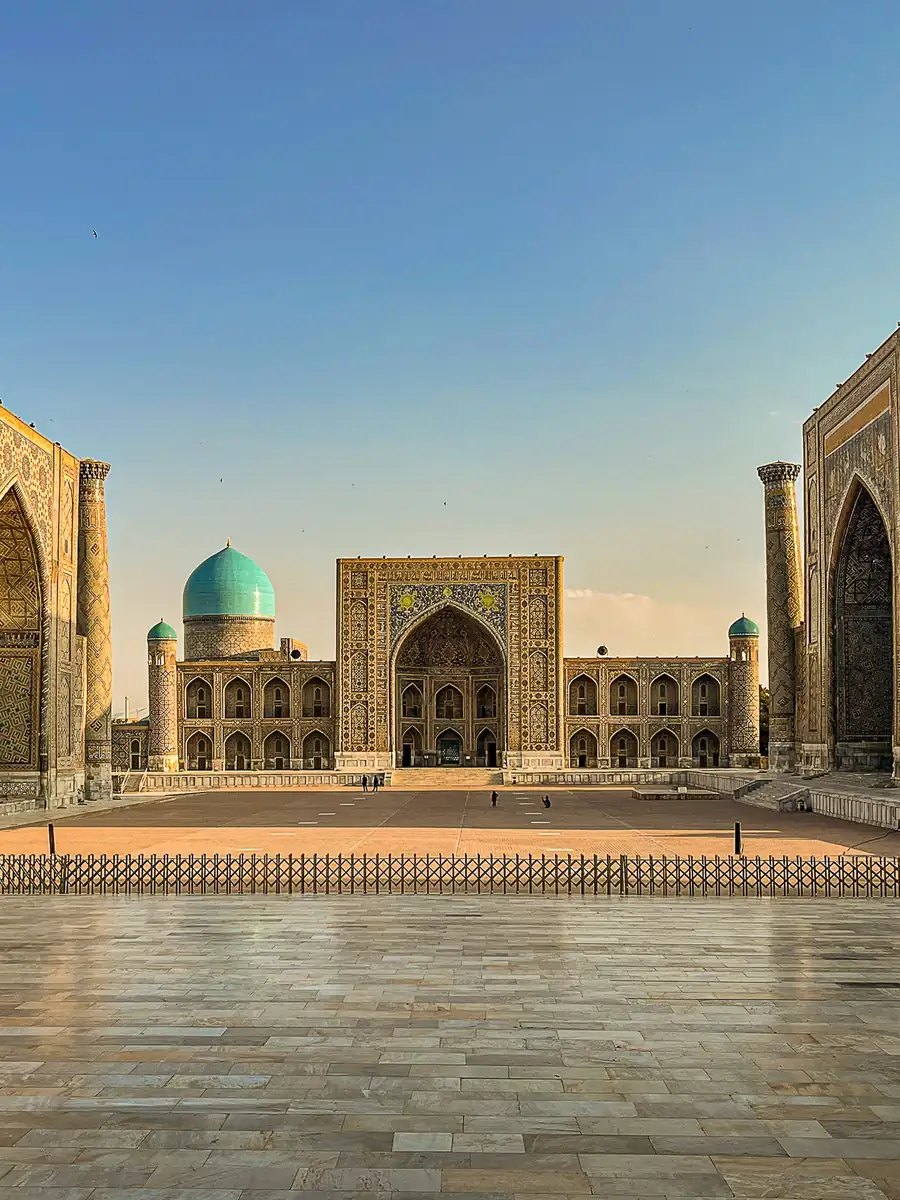
Employment and Labor Lawyers in Tashkent City, Uzbekistan (2026)
Find employment and labor law firms in Tashkent City, Uzbekistan: profiles, offices and direct contacts.
Global Law Lists has 1 employment and labor law firm in Tashkent City, Uzbekistan: Diplomat Law Firm. Outside Tashkent City, the nearest others are in Bishkek (473 km) and Almaty (665 km). Compare with all 23 law firms in Tashkent City and employment and labor law firms worldwide.
Diplomat Law Firm is a law firm in Tashkent, Toshkent, Uzbekistan.
Capabilities/Areas:Practice: Contract Law
Address: Tashkent, Uzbekistan
State: Tashkent
Country: Uzbekistan
Where is the nearest employment and labor lawyer outside Tashkent City?
- LorenzBishkek, Kyrgyzstan473 km
- Aequitas Law FirmAlmaty, Kazakhstan665 km
- SALUS LEGALAlmaty, Kazakhstan665 km
What does an employment and labor lawyer do?
Employment and labour law covers the relationship between employers and workers: contracts, pay and working time, discipline and dismissal, discrimination, redundancies, collective bargaining and trade unions, workplace policies and employment tribunals or labour courts. Lawyers act for employers, employees or unions.
How do I choose an employment and labor lawyer in Tashkent City?
- Ask whether the lawyer usually acts for employers or for employees, and choose accordingly.
- Check the time limit for a claim; it can be very short for dismissal claims in some countries.
- Bring your contract, payslips, handbook or policies and any warning or termination letters.
- Confirm the lawyer is admitted and in good standing with the bar or law society in Uzbekistan, and ask who will handle your matter.
Questions about employment and labor lawyers in Tashkent City
Where is the nearest employment and labor lawyer to Tashkent City?
Outside Tashkent City: Lorenz in Bishkek, Kyrgyzstan (473 km), Aequitas Law Firm in Almaty, Kazakhstan (665 km) and SALUS LEGAL in Almaty, Kazakhstan (665 km), in a straight line.
Hiring a lawyer or law firm in Tashkent
Read the guide
Find a Lawyer in Tashkent, Uzbekistan
Tashkent, the capital of the Republic of Uzbekistan, is the largest city in Central Asia and the center of Uzbekistan's legal profession. The city hosts the majority of the country's licensed advokat (advocates) registered with the Chamber of Advocates of the Republic of Uzbekistan (O'zbekiston Respublikasi Advokatlar Palatasi). Tashkent's legal market has expanded significantly following Uzbekistan's sweeping economic liberalization since 2017, with firms such as Dentons Tashkent, GRATA International, Centil Law, Legalmax, and Colibri Law Firm serving a rapidly opening economy attracting substantial foreign investment.
Tashkent is the seat of the Constitutional Court of the Republic of Uzbekistan, the Supreme Court of the Republic of Uzbekistan (which absorbed the former Higher Economic Court in 2017), and the Tashkent City Court. The Inter-district Economic Courts handle commercial disputes. Uzbekistan's legal system is a civil law system undergoing substantial modernization, with new investment laws, tax codes, and commercial legislation adopted as part of President Mirziyoyev's reform program.
Frequently Asked Questions About Legal Services in Tashkent
1. How much do lawyers charge in Tashkent?
Attorney fees in Tashkent have risen with the growing economy but remain very competitive. International-facing firms charge between 150 to 400 USD per hour for cross-border matters. Established domestic firms bill at 500,000 to 2,000,000 UZS per hour (approximately $40–$160 USD). Solo practitioners offer rates from 200,000 to 500,000 UZS per hour ($16–$40 USD). Fixed-fee arrangements are common for company registration, licensing, and routine commercial transactions.
2. What are the main practice areas in Tashkent?
Tashkent lawyers specialize in foreign investment and joint ventures, mining and natural resources (gold, uranium, copper), energy law (oil, gas, renewable energy), banking and finance reform, privatization and public-private partnerships, tax advisory, and construction and infrastructure. Uzbekistan's economic liberalization program creates unprecedented demand for regulatory compliance, currency control advisory, land use and agricultural reform, and state enterprise privatization.
3. How does the Uzbek court system work?
Uzbekistan has a unified court system following the 2017 reform. District and City Courts handle first-instance civil and criminal matters. Inter-district Economic Courts adjudicate commercial disputes. Regional Courts and the Tashkent City Court serve as appellate bodies. The Supreme Court acts as the cassation instance for all categories of cases. The Constitutional Court reviews the constitutionality of laws and resolves constitutional disputes.
4. What industries drive legal demand in Tashkent?
Key sectors include mining (Navoi Mining and Metallurgical Company is a top-3 global gold producer), energy (oil, gas, solar and wind development), textiles and cotton processing, automotive manufacturing (UzAuto/GM Uzbekistan), agriculture and food processing, construction and urbanization, and tourism development. The Tashkent International Business Centre and multiple Free Economic Zones generate demand for investment structuring and incentive advisory.
5. Can foreign lawyers practice in Tashkent?
Foreign lawyers may provide legal consultancy on foreign and international law through registered entities but cannot appear before Uzbek courts. Admission to the Chamber of Advocates requires passing a qualification examination. Uzbekistan has actively encouraged international law firms to establish offices in Tashkent as part of its economic opening, and several global firms have entered the market since 2018.
6. What dispute resolution options exist in Tashkent?
The Tashkent International Arbitration Centre (TIAC), established in 2018, provides modern commercial arbitration services. The International Commercial Arbitration Court at the Chamber of Commerce and Industry of Uzbekistan handles trade disputes. Uzbekistan acceded to the New York Convention in 1996. The AIFC Court in neighboring Kazakhstan's Astana International Financial Centre is also used for regional disputes.
7. What should foreign investors know about Uzbekistan's legal reforms?
Since 2017, Uzbekistan has implemented transformative reforms including currency convertibility, reduced state enterprise monopolies, new tax code with simplified rates, investment guarantee legislation, streamlined business registration, and Free Economic Zone incentives. The Ministry of Investments, Industry, and Trade serves as the primary government contact for foreign investors. Legal counsel experienced in Central Asian investment law and post-Soviet regulatory frameworks is essential for navigating this rapidly evolving market.
For law firms and lawyers
Is your firm listed in Tashkent?
Firms already in our records are listed at no cost. Claim your profile to manage it, or join the network to add your firm and get verified.